Cistern Liner vs. Cistern Replacement: Which Option Makes More Sense?
If your cistern is leaking, cracked, or requiring one repair after another, eventually you reach a bigger question: should you line the existing cistern, or replace the entire tank? There is no single answer that applies to every property.
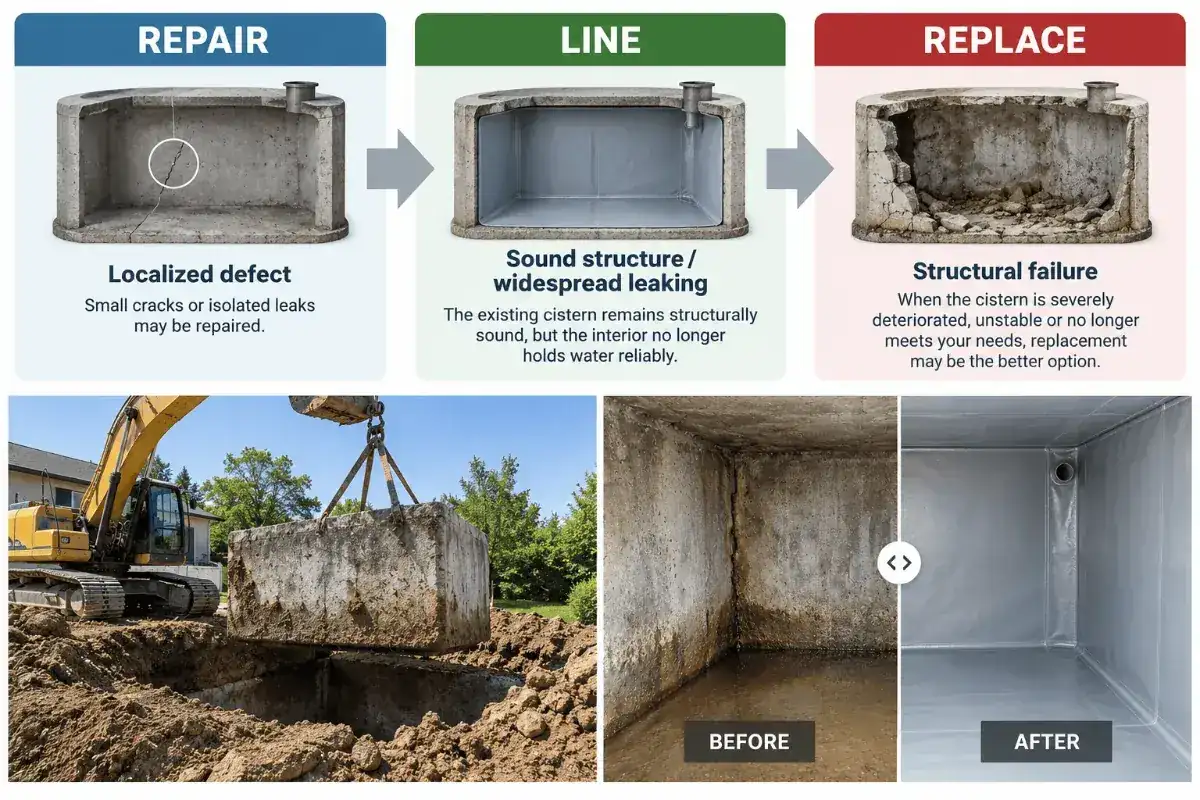
Quick answer: A cistern liner makes sense when the existing cistern remains structurally sound but its interior can no longer reliably contain water. Full replacement becomes more appropriate when the structure itself is severely deteriorated, unstable, or no longer suitable for service. A liner replaces the water-retaining surface. It does not replace the structural function of the cistern itself.
The Short Answer: Start With the Structure
When deciding between a cistern liner and replacement, don't start with the leak. Start with the condition of the cistern itself. Ask: can the existing cistern still safely support the structure around the stored water?
If yes, but the walls, floor, cracks, joints, or previous coatings no longer hold water reliably, a liner may let you preserve the existing cistern while creating a new watertight interior. If no, because walls are moving, sections are collapsing, or serious structural deterioration is occurring, a liner does not solve that problem, and structural repair or replacement may be necessary. The biggest crack isn't always the deciding factor; the real issue is whether the existing structure has enough usable life remaining to justify lining it.
What Does a Cistern Liner Actually Replace?
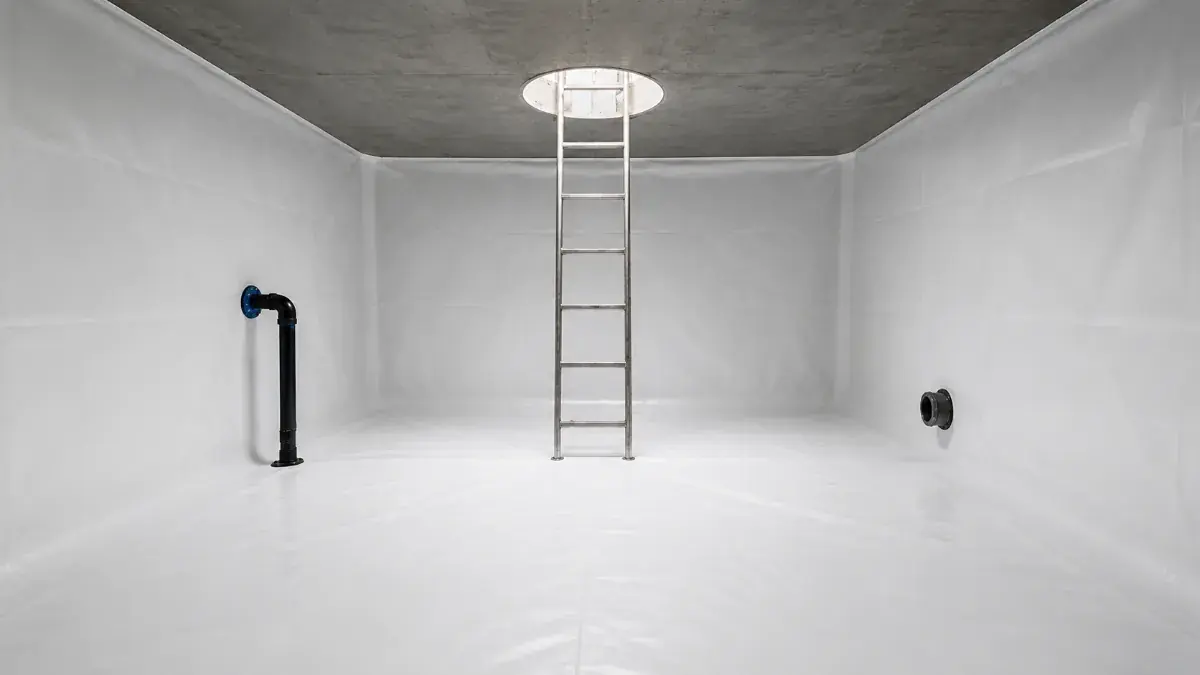
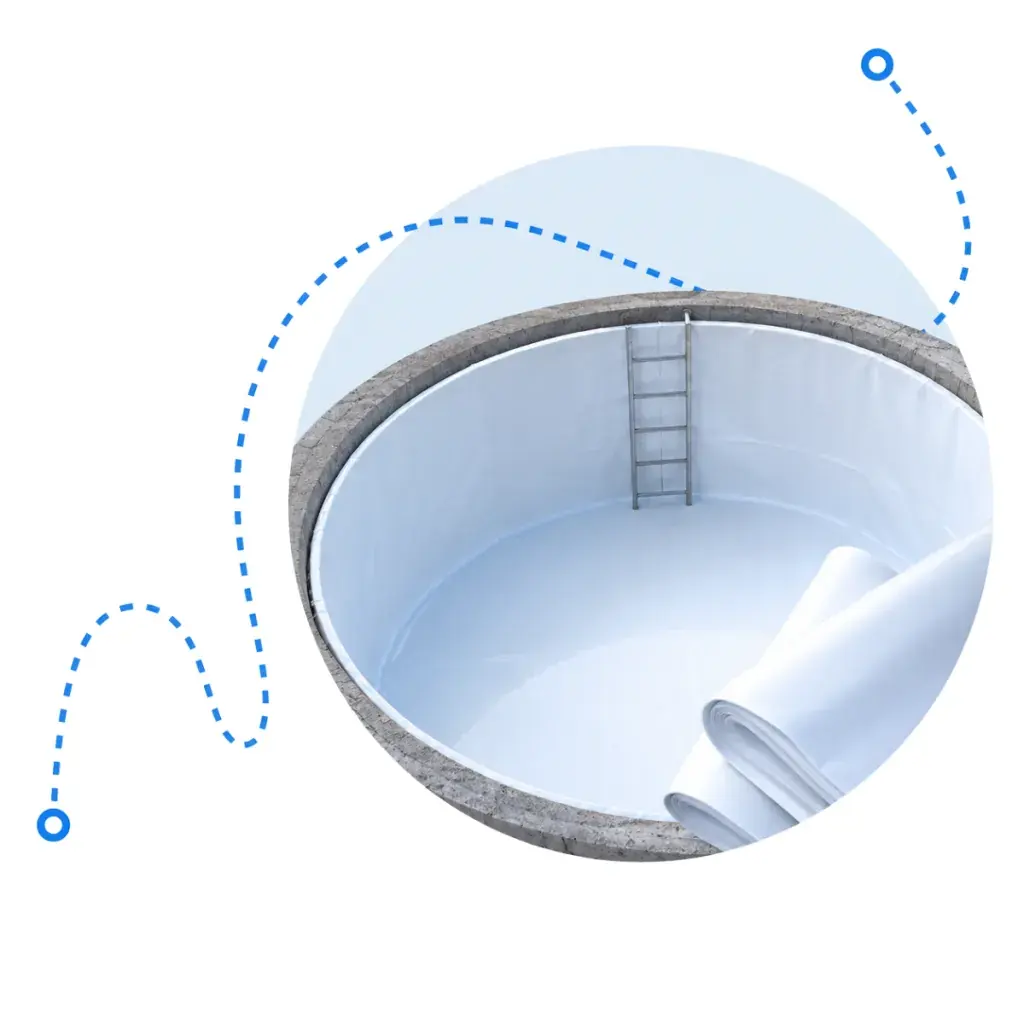
A custom cistern liner does not normally replace the concrete or masonry tank. It replaces its role as the primary water-retaining surface. The original cistern still provides the surrounding structure; the flexible liner installed inside it provides the watertight barrier that contains the stored water. Two different jobs: the existing cistern provides structure, the liner contains the water.
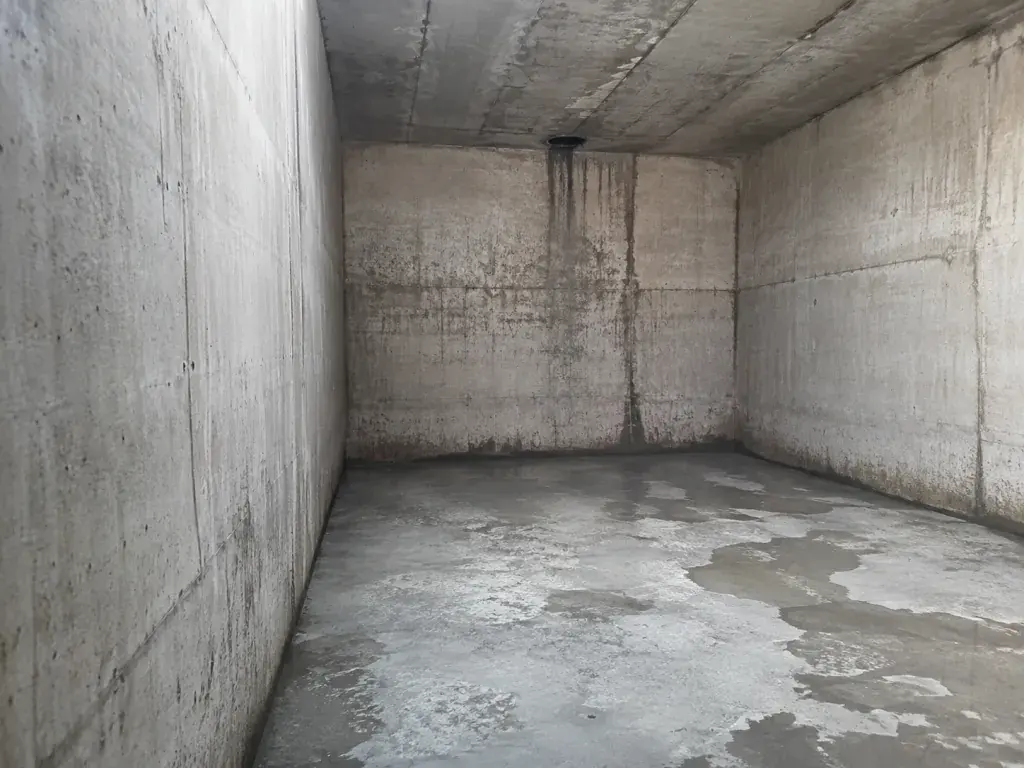
That separation is what makes lining an older cistern possible. A concrete cistern can have cracking, aging surfaces, previous patches or deteriorated coatings while still remaining structurally usable. If the structure is suitable, installing a liner may allow the owner to address the water-retention problem without removing the entire cistern.
What Does Full Cistern Replacement Involve?
Replacement takes a very different approach: instead of preserving the existing tank, the old cistern is taken out of service and a new water-storage system is installed. The exact work depends heavily on the property. For an accessible above-ground tank, replacement may be relatively straightforward. For an underground concrete cistern beneath or beside an established property, the project can become substantially more involved, potentially requiring:
- Draining the existing cistern
- Disconnecting plumbing
- Demolition
- Excavation
- Removal of concrete or tank components
- Equipment access
- Soil removal
- Installation of a replacement tank
- New or modified plumbing connections
- Backfilling
- Grading
- Concrete or landscaping restoration
- Reconnection and commissioning
Not every replacement involves all of these steps, but it's worth comparing the entire replacement project, not simply the purchase price of a new tank.
7 Factors to Compare Before Deciding
1. Structural condition
This should be the first consideration. A cistern liner needs a suitable structure around it. Signs that deserve closer structural evaluation: significant wall displacement, large displaced cracks, major settlement, collapsing block or masonry, severe concrete deterioration, failing ceilings or covers, exposed or heavily deteriorated reinforcement, continued movement of the tank.
By contrast, a cistern with a structurally usable shell but an aging, cracked or porous interior may be a strong candidate for lining. The question isn't "does the cistern have cracks?" It's "what do those cracks tell us about the condition of the structure?" Minor leakage cracks and serious structural cracking are not the same thing.
2. How widespread is the leakage?
One isolated leak is different from an entire cistern that has become difficult to keep watertight. If the problem is limited to one repairable pipe penetration or isolated crack, localized repair may be sufficient. If you're dealing with numerous cracks, multiple leaking joints, porous concrete, widespread deterioration, failed coatings, or several generations of old repairs, creating one new continuous water-retaining barrier may make more sense than repairing every defect separately.
3. What repairs have already been tried?
An old cistern often tells its own history: hydraulic cement, coatings, mortar, caulking, epoxy, crack fillers and patches from several previous attempts. Those methods aren't necessarily wrong; the issue is whether they're working. If an isolated repair solves the problem for years, it was probably the right repair. If you repeatedly drain, patch, refill, discover another leak, and drain again, it may be time to stop treating each symptom individually. A custom liner takes a different approach by creating a separate barrier across the whole interior.
4. How difficult would replacement be?
Accessibility can dramatically change the comparison. Is the cistern underground? Close to the house? Beneath a garage, patio, deck, or other structure? Can excavation equipment reach it? Would concrete need to be removed? Are utilities nearby? Would landscaping be destroyed? Is there enough space to install a replacement tank? Would plumbing need to be rerouted?
If an existing concrete cistern remains structurally suitable, preserving it may avoid substantial site disruption. On another property, replacement may be simple enough that installing a new tank is the more practical choice. There's no responsible universal statement that lining is always cheaper, or that replacement always is. The site matters.
5. What is the total cost?
Cost is obviously important, but comparisons need to be apples-to-apples. For a liner, include cistern preparation, necessary repairs, fabrication, shipping, installation, fittings and penetrations, and applicable water-service requirements. For replacement, include more than the price of the tank itself: demolition, excavation, removal, equipment, delivery, installation, plumbing, backfill, permits or inspections, and restoration of disturbed areas. The lowest material price does not necessarily produce the lowest completed-project cost.
6. Does the existing cistern still meet your capacity needs?
This is one area where replacement can have a clear advantage. A liner can restore the water-retaining ability of an existing cistern. It generally does not transform an undersized cistern into a larger one. If your property now requires significantly more storage capacity than the existing cistern provides, replacing or supplementing it may make more sense. Ask whether you're trying to repair the existing system, or change it. Those are different projects. Our tank volume calculator can help you check your current capacity.
7. What will the water be used for?
The intended use of the stored water matters when selecting either a liner or a replacement tank. A cistern storing potable water requires materials appropriate for drinking-water contact, so the liner material, fittings and installation system should be selected for the intended application. The same applies when purchasing a replacement tank. Don't assume every tank or membrane is automatically suitable for potable-water storage just because it can physically hold water.
When Does a Cistern Liner Usually Make More Sense?
A liner deserves serious consideration when several of the following apply:
The cistern remains structurally sound
The most important factor. If the existing cistern can keep performing its structural job, replacing its water-retaining surface may be more practical than replacing the whole structure.
The leakage is widespread
Multiple cracks, porous concrete, deteriorating surfaces and repeated leaks can make individual repair increasingly frustrating. A liner creates a continuous barrier rather than addressing one defect at a time.
Previous repairs keep failing
If you've already patched the cistern several times, continuing the same cycle may provide diminishing value.
Replacement would require substantial excavation or demolition
An underground concrete cistern in an established location may be difficult to remove. Keeping the existing structure avoids some of that disruption.
The cistern is an unusual size or shape
Existing cisterns are often not standard. A custom liner can be fabricated to match the tank's actual dimensions and configuration, including irregular shapes and penetrations.
The current storage capacity is still adequate
If you're happy with the size and general configuration, restoring the existing system may be more logical than redesigning it.
When Does Complete Cistern Replacement Make More Sense?
The structure is failing
If the walls, floor, ceiling or surrounding structure can no longer safely perform their job, installing a waterproof membrane does not correct that failure. A liner is a raincoat, not a new skeleton.
Major movement is continuing
A tank undergoing significant settlement or structural movement needs more than waterproofing. The underlying cause should be understood and addressed.
The cistern is severely deteriorated
There's a difference between a deteriorated surface and a deteriorated structure. Where substantial portions have lost structural integrity, replacement may be more appropriate.
You need significantly more water-storage capacity
A liner works within the existing cistern. If the tank is too small for the property's needs, replacement or additional storage may solve both the condition problem and the capacity problem.
Replacement is simple and economically competitive
Not every cistern is buried beneath a difficult site. If the existing tank can be easily removed and a modern replacement installed with little disruption, the economics may favour replacement.
The existing design creates problems that lining cannot correct
Sometimes the issue isn't simply leakage. Poor access, an unsuitable configuration, inadequate capacity or other design problems may justify replacing the system rather than preserving it.
Cistern Liner vs. Replacement: Side-by-Side
| Consideration | Cistern Liner | Full Replacement |
|---|---|---|
| Existing structure | Retained | Removed, abandoned or replaced |
| Main purpose | Creates new watertight interior | Creates new tank/system |
| Best suited to | Structurally usable leaking cistern | Structurally failed or unsuitable cistern |
| Excavation | Often reduced or avoided | May be required |
| Demolition | Often reduced | Often part of project |
| Custom sizing | Yes | Depends on replacement system |
| Increases capacity | Generally no | Potentially yes |
| Site disruption | Often less | Can be substantial |
| Structural repair | Does not replace structural function | New tank provides new structure |
| Potable-water option | Requires appropriate liner material | Requires appropriate tank/material |
| Cost | Project specific | Project specific |
The important word in that table is "often." Every property is different. A liner should not be sold as the right answer when replacement makes more sense, and an existing concrete cistern should not automatically be demolished simply because it has started leaking.
Is a Cistern Liner Always Cheaper Than Replacement?
No. And anyone evaluating your cistern should be willing to tell you that. A liner can avoid many of the costs associated with demolition, excavation and installing a completely new tank, which can make lining financially attractive. But extensive preparation, structural repairs, difficult access or the condition of the existing cistern can change the economics. A readily accessible tank that can be replaced relatively easily may make replacement competitive instead.
Don't ask "which option is always cheaper?" Ask "what is the total installed cost of each practical option for this specific property?" Then compare what you actually get for that investment.
What About Patching the Existing Cistern Instead?
There's actually a third choice. Sometimes you don't need a liner or a new cistern. A localized repair may be enough. Think of it as a progression: a localized problem gets a repair; a sound structure with a widespread water-retention problem is worth considering for lining; an unsound or unsuitable structure is worth considering for replacement. This framework avoids two expensive mistakes: replacing a cistern that could have been economically repaired or lined, and lining a cistern that should have been replaced. See cistern repair options for how we triage each case.
Questions to Ask Before Replacing Your Cistern
- Is the existing cistern structurally sound?
- Is the problem structural, or is it primarily leakage?
- How many areas are leaking?
- Have previous repairs repeatedly failed?
- Can the existing cistern be prepared for a liner?
- Would replacement require excavation or demolition?
- Is my existing water-storage capacity adequate?
- What is the total cost of lining compared with the complete installed cost of replacement?
- What material will contact the stored water?
- What work is required before either option can proceed?
The answers provide a far better basis for the decision than simply looking at the age of the cistern.
How Do You Find Out Whether Your Cistern Can Be Lined?
You can begin without committing to either repair or replacement. Gather a few basic details.
Take photographs
The overall cistern interior, visible cracks, previous repairs, deteriorated areas, corners, pipe penetrations, access openings, and any unusual features.
Gather the dimensions
At minimum, length, width and depth. Also identify columns, compartments, steps, unusual corners or other features.
Never enter a cistern to obtain measurements unless you are qualified to do so safely. Cistern entry can involve confined-space hazards. This is not a spot to improvise.
Describe what is happening
How quickly water is being lost, how long the problem has existed, whether repairs have already been attempted, whether the cistern is concrete, block or another material, and how the stored water is used. That information helps determine whether lining deserves further consideration.
Before You Replace Your Cistern, Find Out Whether You Can Preserve It
A leaking cistern does not automatically need to become a demolition project. If the existing structure remains suitable, a custom cistern liner may allow you to keep the cistern you already have while creating a new watertight interior. On the other hand, if the structure has reached the end of its serviceable life, replacement may be the smarter long-term choice. The objective shouldn't be to choose a liner at all costs. It should be to choose the right solution for the condition of the cistern.
Deciding between lining and replacing?
Send us photos, approximate length/width/depth, your location, a brief description of the leak or deterioration, and information about previous repairs. We'll help determine whether a custom liner is worth pursuing.
Frequently Asked Questions
Is lining or replacing a concrete cistern better?
If the existing cistern remains structurally sound and the primary problem is leakage or deterioration of the water-retaining surface, lining may be a practical option. If the structure itself is seriously compromised or no longer meets the property's needs, replacement may make more sense.
Is a liner cheaper than replacing a cistern?
It can be, particularly where replacement would involve significant excavation, demolition or restoration. However, costs are project-specific and should be compared using the complete installed scope of each option.
Can an old concrete cistern be lined?
Yes, many older concrete cisterns can potentially be lined. Age alone does not determine suitability. Structural condition, surface preparation, dimensions and the intended use of the stored water are more important factors.
Can a badly cracked cistern be lined?
It depends on why the cistern is cracked. Leakage cracks in an otherwise stable structure may be compatible with a liner installation. Significant structural cracking, movement or instability requires further evaluation and may make replacement more appropriate.
Does a cistern liner repair structural damage?
No. A cistern liner creates a water-retaining barrier. It should not be treated as a substitute for structural repairs to an unstable or severely deteriorated tank.
Does a liner increase cistern capacity?
Generally, no. A liner works within the existing cistern dimensions. If you need substantially more water-storage capacity, replacement or supplementary storage may be more appropriate.
Must the old concrete cistern be removed for a liner?
Normally, the purpose of lining is to use the existing suitable structure rather than remove it. The liner is installed inside the prepared cistern.
Should a cistern be replaced just because it's old?
Not necessarily. Condition is more important than age alone. An older structurally sound cistern with a failed water-retaining surface may still be a candidate for lining, while a newer but structurally compromised cistern may require more extensive work.
Further reading: NSF/ANSI/CAN 61 drinking water components standard (SCC), CSA B126 water cistern standard (SCC), and Alberta Agriculture guide to cistern water storage.
↑ Back to top