Water Tank Liners Explained: Materials, Cost, and How They Work
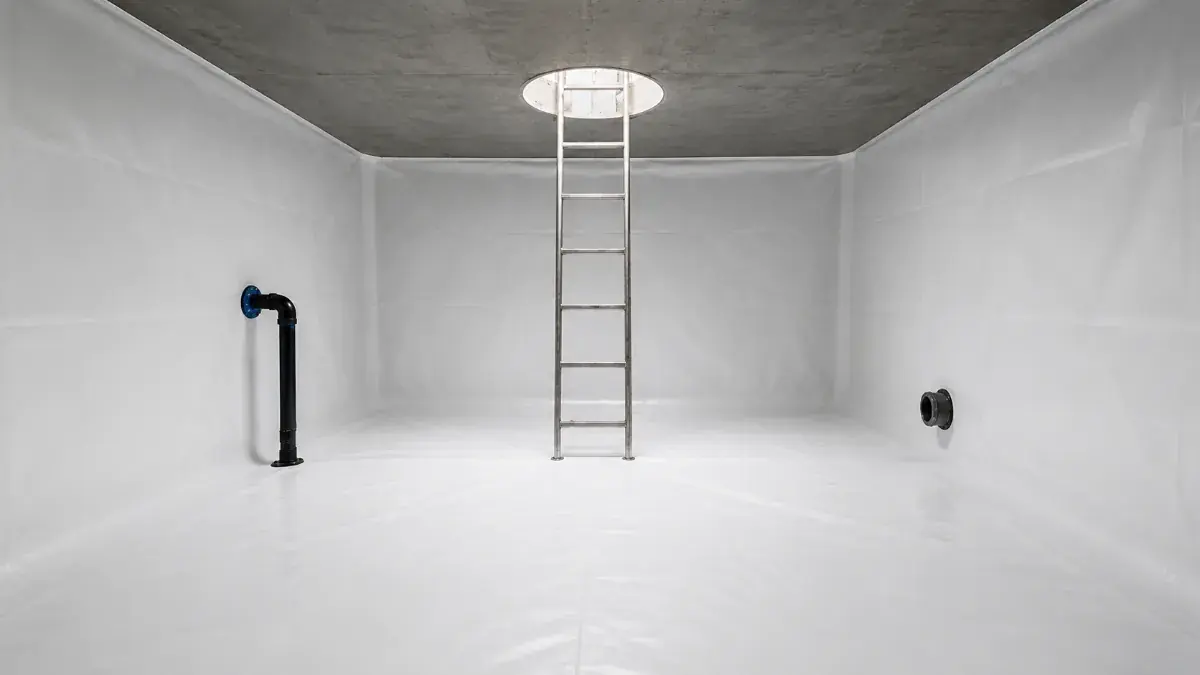
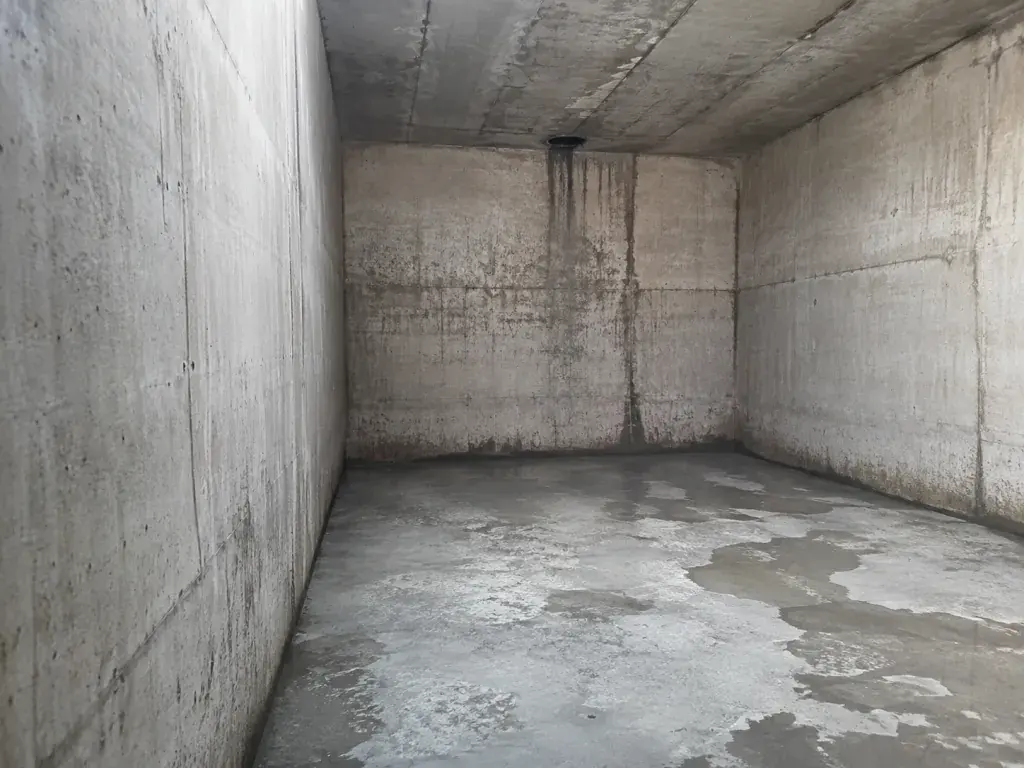
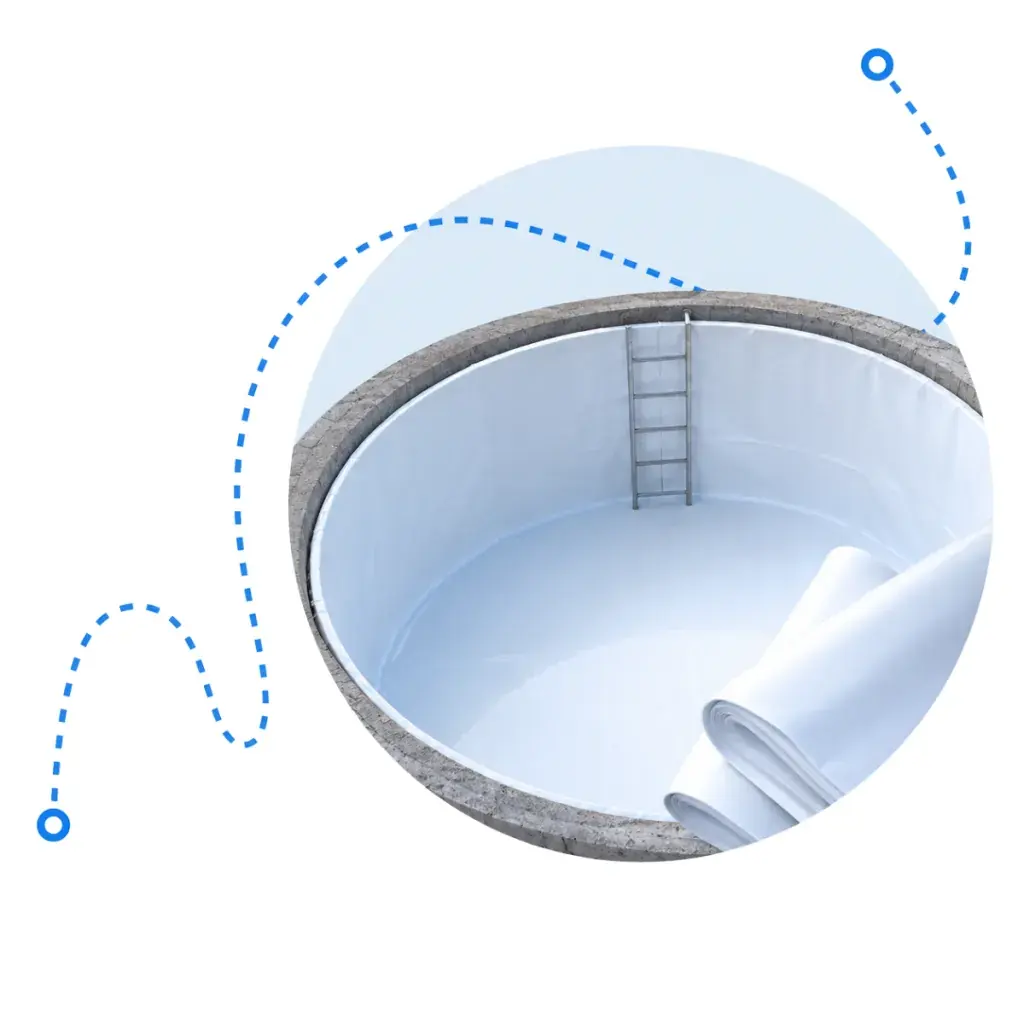
Quick answer: A tank liner is a custom-fitted membrane installed inside an existing tank to stop it from leaking, without replacing the tank itself. The original tank becomes structural support; the liner becomes the actual water barrier.
This applies to residential cisterns as much as it does to commercial and industrial storage tanks. The engineering idea is identical across all three: a new, sealed surface inside an old, no-longer-sealed one. That's a simpler pitch than most repair options manage.
Residential vs. commercial vs. industrial tank liners
The engineering principle stays the same across all three; the specification does not.
- Residential: typically smaller volumes, drinking-water grade material required if the tank feeds a household
- Commercial: larger volumes, potable or non-potable depending on the business
- Industrial: material spec depends heavily on what is actually stored, since chemical resistance and temperature range matter more than they do for plain water storage
See our pages for residential and commercial and agricultural liners.
Materials: which ones are drinking-water safe
Food-grade, potable-rated liner materials exist specifically for drinking water use, and the distinction matters. A liner rated for, say, a fertilizer tank is not automatically safe for a cistern feeding a kitchen tap, even if the material looks and handles similarly. If your tank supplies drinking water, confirm the potable rating before ordering. Do not assume it by default.
Don't assume, confirm. "Industrial-grade" sounds impressive on a spec sheet, but it doesn't automatically mean food-safe. If potable water is going in that tank, ask for the specific rating by name, not the marketing language around it.
What affects pricing
- Size and shape of the tank: irregular shapes take more work to template correctly
- Material: potable-grade generally costs more than standard-grade
- Access: a tank you can walk into is a different job than one reached through a narrow hatch
- Existing condition: a structurally sound tank versus one needing extra prep before the liner goes in
There is no single number that applies across all of that, which is why a quote looks at the specific tank rather than quoting off a size chart.
How to order one
The process starts with a rough sense of the tank, not a finished set of blueprints. Measure what you can, take a few photos, and describe the construction type and how the tank is used. Exact measurements are not required to start. From there, the liner is templated to the tank's actual dimensions. Our measuring guide shows exactly what to capture.
Tip: Photograph the inside of the tank if you can safely access it, not just the outside. A shot of the actual wall condition (cracks, staining, old patch jobs) tells more than a tape measure ever will.
Frequently asked questions
Will a liner fit any tank shape?
Liners are custom-made to the tank's actual dimensions, so irregular shapes get accounted for at the templating stage rather than forcing a standard size to fit.
Is a liner as durable as replacing the tank?
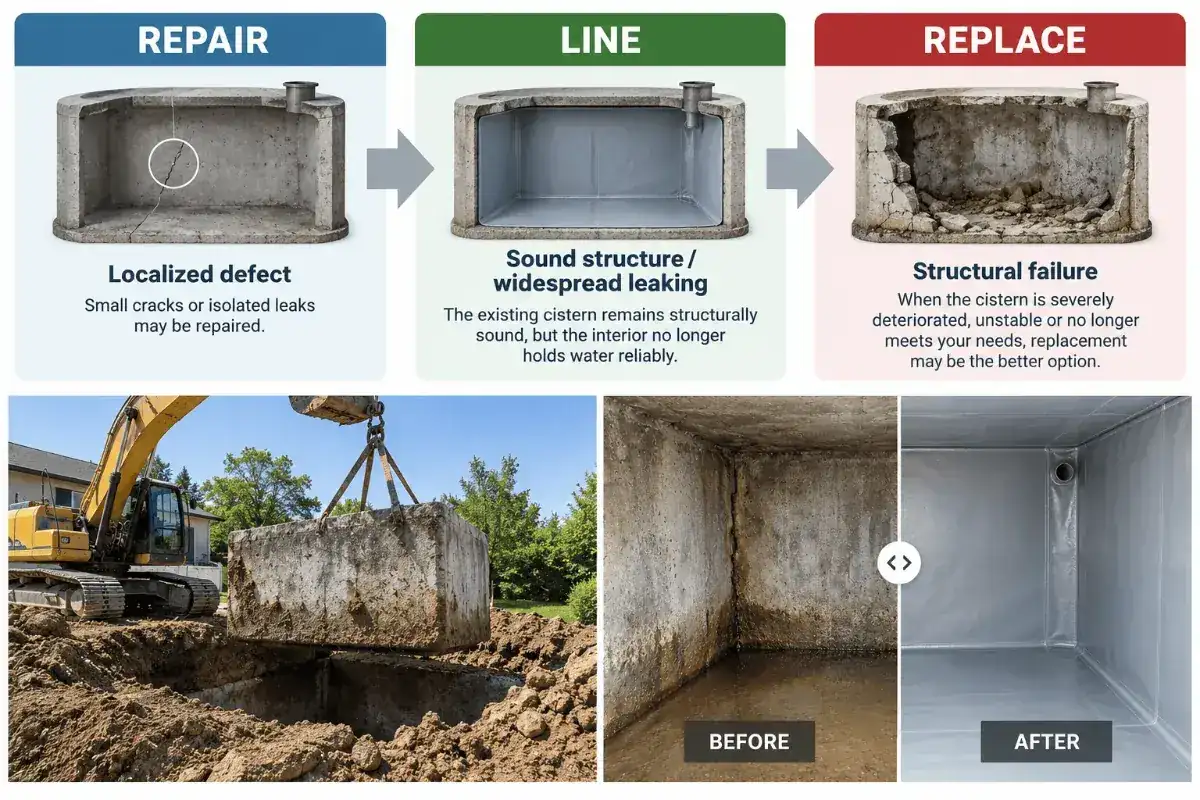
A liner solves the leak, not the tank's underlying structure. If the structure itself is failing, not just the surface, replacement is the more honest answer, and that is worth saying upfront rather than selling a liner that would just delay the same problem. See liner vs. replacement for how to tell the difference.
Can a liner go into a tank still in use?
Generally not while it is holding water. Installation needs the tank empty and accessible, so plan for it to be offline for the work. A liner installer and a full tank have never once gotten along.
Further reading: NSF/ANSI/CAN 61 drinking water components standard (SCC), CSA B126 water cistern standard (SCC), and Alberta Agriculture guide to cistern water storage.
↑ Back to top