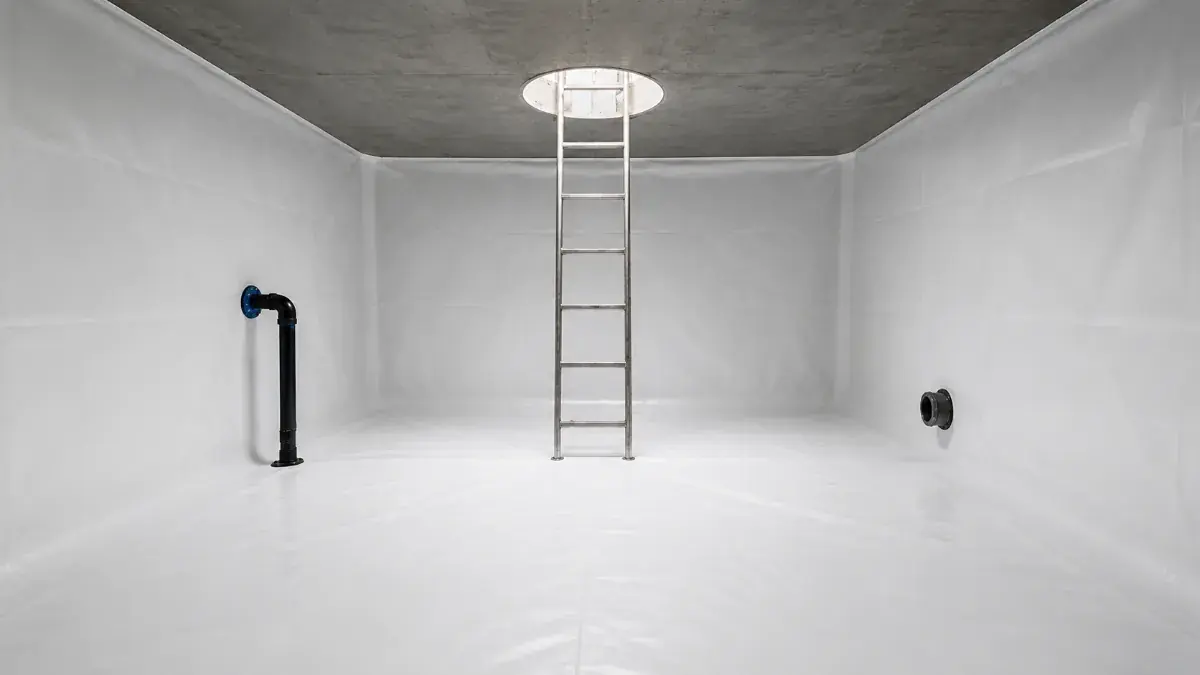
Cistern Water Tank Basics: How They Work & What to Know
Quick answer: A cistern water tank is a sealed, usually underground container that stores water for later use. It doesn't treat the water, it just holds onto it. How long it lasts comes down to material, sealing, and whether anyone actually looks at it once a year.
Most rural and off-grid properties in Ontario rely on one, whether the water comes from a well, a hauled-water delivery, or collected rainfall. The tank itself has exactly one job: hold water without losing it, contaminating it, or freezing solid halfway through winter. It is not a complicated brief, which is exactly why it's easy to ignore until it fails one of the three.
How cistern installation works
New cisterns go in one of two ways: poured or formed on site (mostly concrete), or delivered pre-made (poly, fiberglass, or steel) and set into an excavated pit. Concrete cisterns are built into the ground and connected to intake and outlet lines before backfilling. Poly tanks arrive finished and just need levelling and hookup. Either way, three things decide whether the tank actually works long-term: the seal at every joint and penetration, drainage around the tank so groundwater is not pushing against it, and access for inspection later. Skip that last one and you are guessing about problems instead of finding them early. A beautifully poured cistern with no way to look inside it is still, eventually, a mystery.
Tip: Ask whoever installs the tank to leave a real access point, not a token one. A hatch you can actually fit through is the difference between a five-minute inspection and a problem nobody finds until the water bill does.
Concrete cisterns vs. other tank types
| Type | Typical behaviour | Common failure point |
|---|---|---|
| Concrete | Decades of service, if maintained | Cracks at pour joints |
| Poly/plastic | Long-lived, lighter, easier to install | UV degradation above ground |
| Steel | Durable when coated | Corrosion once the coating fails |
| Fiberglass | Resistant to most degradation | Impact damage, gelcoat cracking |
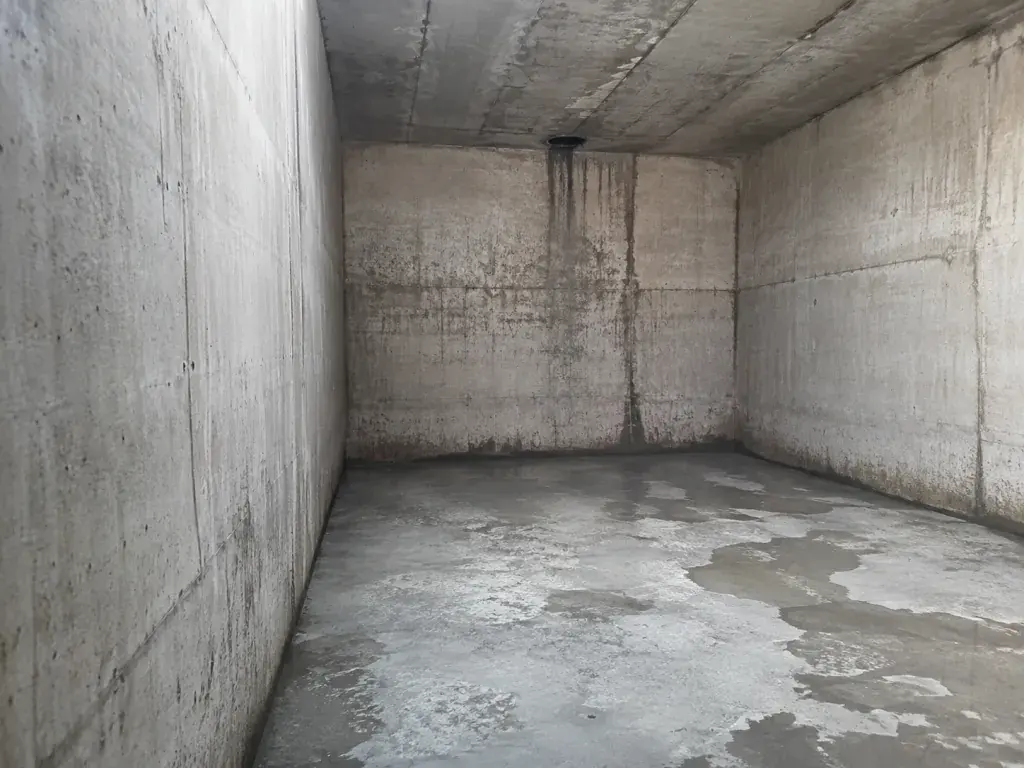
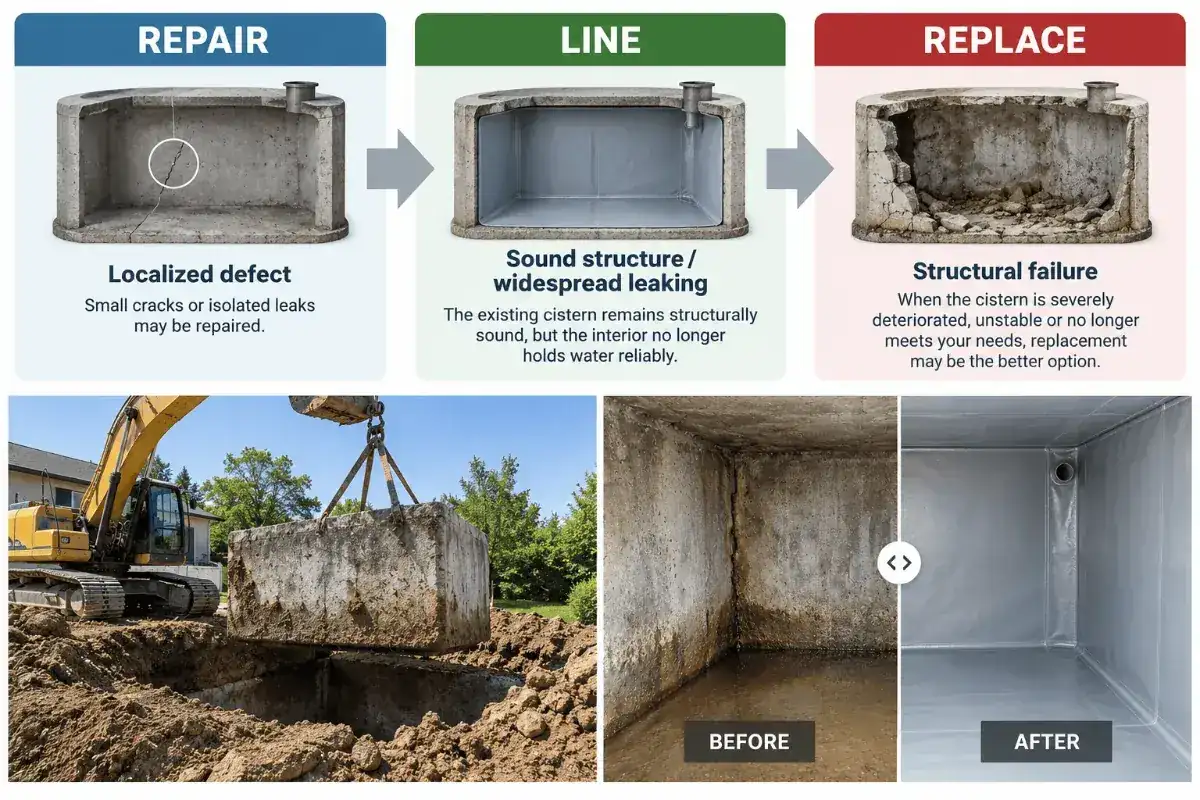
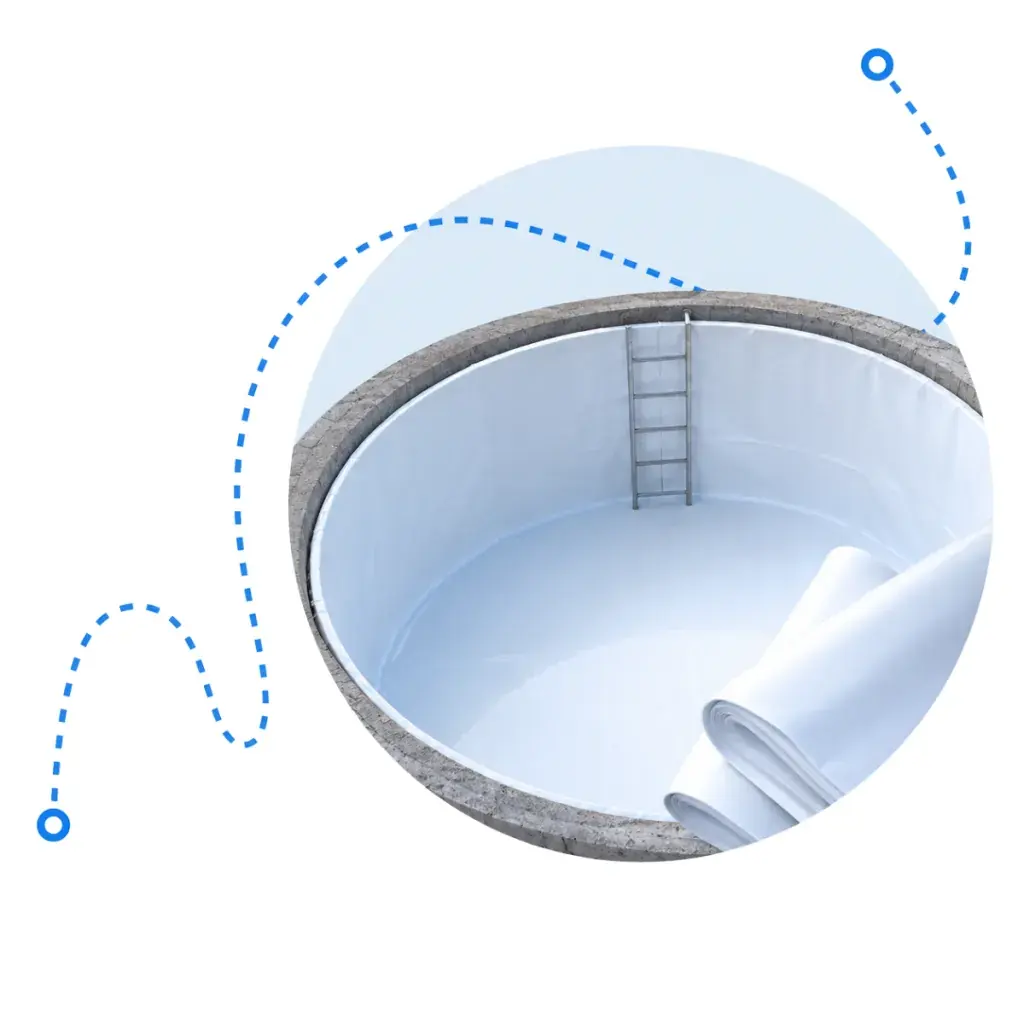
Concrete is the material most people picture when they hear the word cistern, and it is also the one most likely to eventually need a liner rather than a repair from scratch. Concrete is porous by nature, which is a polite way of saying it was never fully watertight to begin with. It just took a few decades for that to become your problem. Learn more about concrete cistern liners.
Common problems that show up over time
- Hairline cracking at pour joints or where pipes penetrate the wall
- Water loss that goes unnoticed until you check usage against a fill
- Groundwater pressure pushing in from outside, just as much a problem as water pushing out
- Sediment buildup that never gets flushed because there is no easy access
- Old fittings that were fine in year one and are the weak point by year twenty
None of these announce themselves loudly. A cistern doesn't send a warning text. It just quietly costs you more water than it used to, until someone finally does the math.
Maintenance basics
- Visual inspection at least once a year, more often if the cistern's age is not well documented
- Track water usage against fill volume, so a leak shows up as a number, not a guess
- Keep the surrounding grade sloped away from the tank
- Check fittings and access hatches for seal integrity
When to skip the DIY fix: If you're dealing with a structural crack rather than a surface seep, that is worth a second opinion before you reach for a $40 tube of sealant. That fix is not going to be the hero of this story. It just delays the part where you call someone who can actually see what's happening on the other side of the wall.
When to call a professional
Call in a professional when you see water loss you cannot account for, visible cracking, or the cistern is old enough that nobody currently on the property knows its full history. A cracked cistern is not usually an emergency the way a burst pipe is, but it becomes one slowly, and by the time it is obvious, the fix is often bigger than it needed to be. Not sure what to look for? Read the 7 signs of a leaking cistern.
Frequently asked questions
How long does a cistern last?
It depends heavily on material and maintenance. Concrete cisterns can last decades but degrade gradually as the material ages; poly and fiberglass tanks tend to have long service lives with less upkeep, provided they are not physically damaged. There is no single number that applies to every cistern. One that has never been inspected is a different question than one that has been maintained.
Can I install a cistern myself?
Setting a pre-made poly tank is within reach for some property owners with the right excavation equipment. A poured concrete cistern is not a DIY project. It involves structural work, code considerations, and getting the seal right the first time, because fixing a sealing mistake after the fact costs more than doing it correctly up front.
What is the difference between a cistern and a well?
A well draws water from the ground on an ongoing basis. A cistern stores water that arrived some other way, hauled in by truck, collected from rainfall, or drawn periodically from a well, for use over time. Some properties use both, mostly because nature doesn't always deliver water on a schedule you'd choose yourself.
Further reading: NSF/ANSI/CAN 61 drinking water components standard (SCC), CSA B126 water cistern standard (SCC), and Alberta Agriculture guide to cistern water storage.
↑ Back to top