Leaking Cistern? 7 Signs You May Need a Cistern Liner
If you're filling your cistern more often than you used to, noticing cracks inside the tank or wondering where your stored water is going, your cistern may be leaking.
Common signs of a leaking cistern include unexplained water loss, visible cracks, deteriorating interior surfaces, failed previous repairs, moisture around the tank, leakage near pipes or joints, and refilling more often than you used to. A leak doesn't automatically mean the whole tank needs replacing. A custom cistern liner may be able to fix it instead.
A small amount of unexplained water loss can be easy to dismiss at first. But leaks in an older concrete or masonry cistern rarely become easier to deal with simply by ignoring them. Here are seven warning signs to watch for.
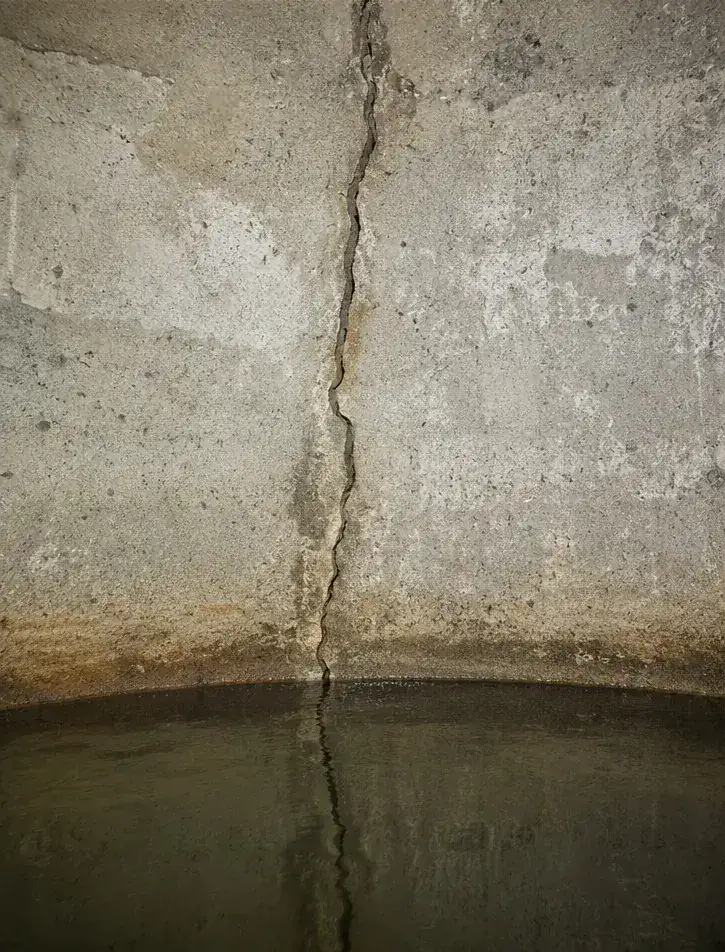
How Do You Know Whether Your Cistern Is Leaking?
Not every drop in water level means the cistern itself has failed. Before assuming the tank is leaking, consider other possible causes of water loss:
- Increased household water use
- A leaking toilet or plumbing fixture
- A damaged supply line
- A leaking pump or fitting
- Seasonal changes in water consumption
- Problems with the cistern's inlet, overflow or outlet plumbing
If your water use hasn't changed and there is no obvious plumbing problem, continued unexplained water loss still deserves further investigation. An older concrete or masonry cistern can lose water through cracks, deteriorated surfaces, construction joints, pipe penetrations, and failing previous repairs. That brings us to the first, and often most noticeable, warning sign.
Sign #1: Your Cistern Water Level Keeps Dropping
You fill the cistern. Nobody has used an unusual amount of water. Yet the level continues to fall faster than expected. That's one of the clearest reasons to investigate for a possible leak.
The amount of water lost can vary considerably. A substantial opening may produce obvious water loss; a smaller crack or porous area may create a slow leak that becomes noticeable only over several days. This is why it helps to look for a pattern rather than relying on one observation. If you suspect a leak, monitor the cistern level while accounting for normal household or property water use. If the cistern repeatedly loses more water than your usage can explain, the tank itself may be part of the problem.
Why this matters
A leak doesn't have to produce a visible stream of water to become expensive. Continually replacing lost water can add up, particularly on properties where water needs to be delivered by truck. More importantly, unexplained water loss is often a symptom rather than the underlying problem. Finding out why the cistern is losing water is the next step.
Sign #2: You Can See Cracks in the Cistern
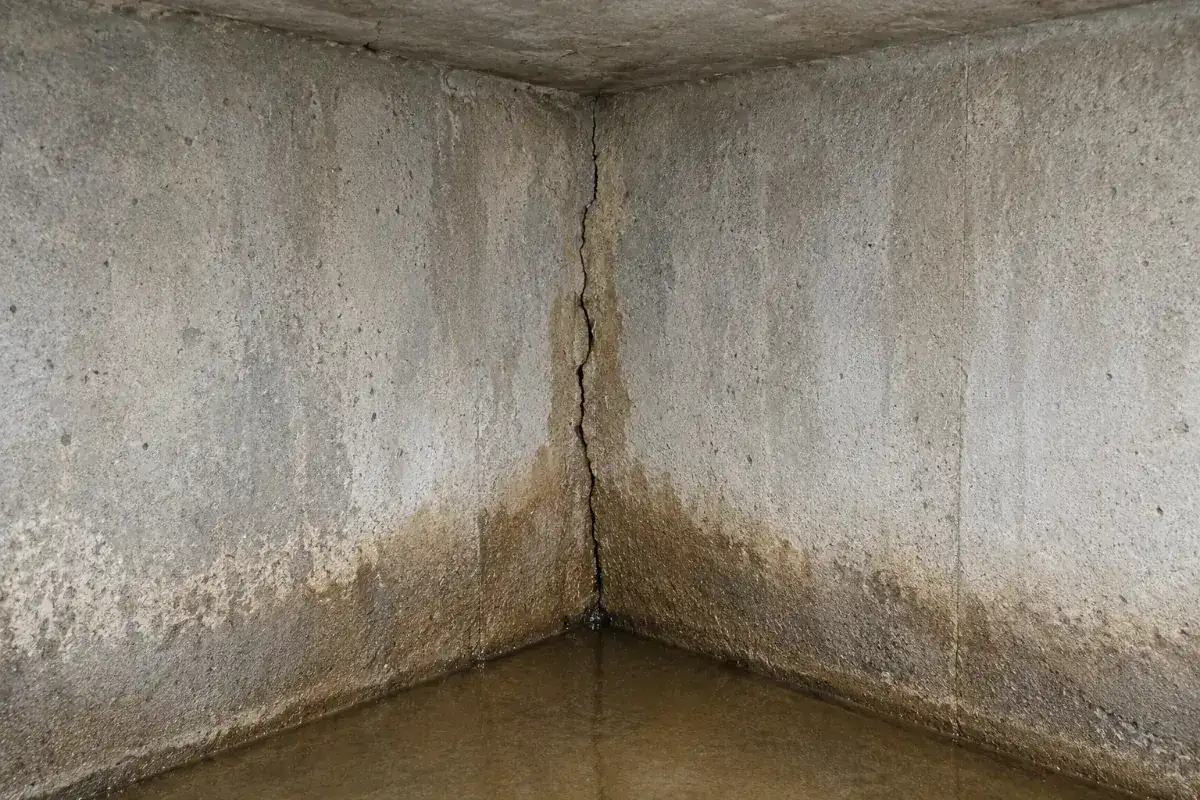
Cracks are common concerns in older concrete cisterns. Not every visible crack means the tank is structurally failing, and not every crack necessarily leaks, but a crack in a water-retaining structure shouldn't be dismissed either. Concrete can crack because of settlement, shrinkage, ground movement, temperature changes, freeze-thaw conditions, aging, or structural stresses. You may see cracks along the walls, floor, corners or joints, and some may already have been repaired in the past.
Does a crack mean you need a cistern liner?
Not necessarily. A small isolated crack may sometimes be an appropriate candidate for a localized repair. The situation changes when there are numerous cracks, recurring cracks or widespread leakage. At that point, repeatedly treating individual defects may become less attractive than creating a continuous waterproof barrier inside the cistern. That's where a liner may be worth considering. Significant structural movement or instability, however, needs to be addressed separately: a liner is a water-retaining membrane, not a replacement for the structural strength of the cistern itself.
Sign #3: The Interior of the Cistern Is Deteriorating
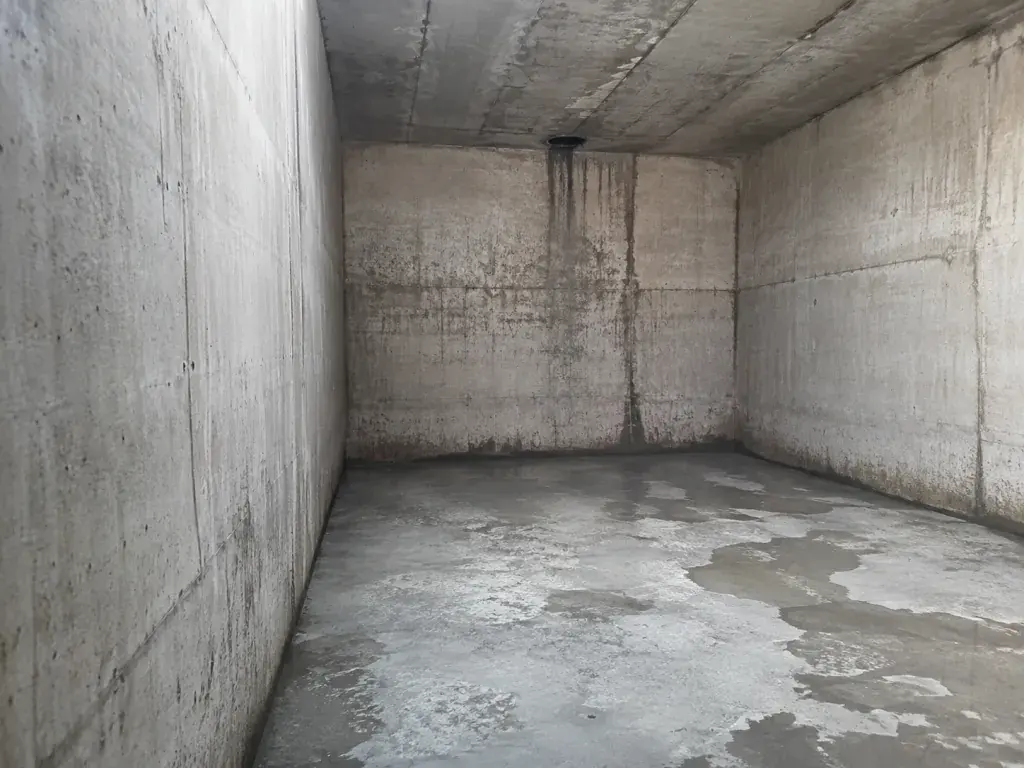
Sometimes the problem is bigger than one obvious crack. Look at the overall condition of the cistern interior. You may notice rough or deteriorating concrete, loose material, flaking surfaces, areas where previous coatings are separating, crumbling mortar in masonry construction, multiple patched areas, or exposed and increasingly uneven surfaces.
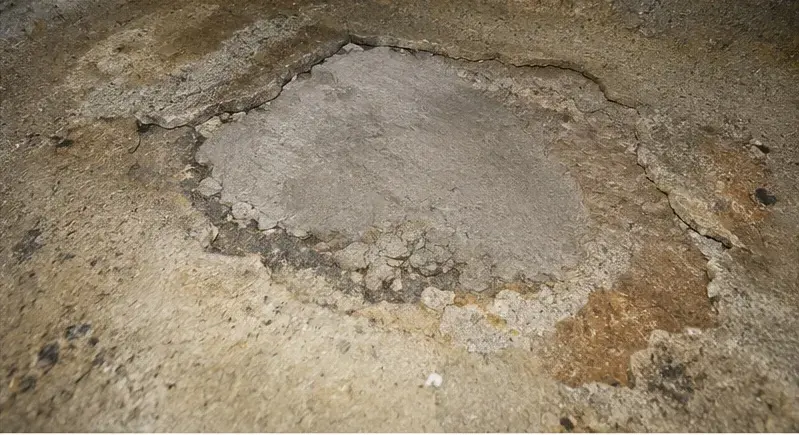
A cistern can remain structurally usable while its original water-retaining surface is no longer performing reliably. This distinction matters. If the structure remains suitable but the interior has become difficult to keep watertight, installing a liner may allow the existing cistern to keep providing the structure while the liner becomes the new water-retaining surface, rather than depending on aging concrete or masonry to hold the water.
Sign #4: Previous Cistern Repairs Keep Failing
Take a look around an older cistern and you may be able to see its repair history: hydraulic cement patches, mortar repairs, sealants, waterproof coatings, previously filled cracks, or multiple generations of different repair products. That doesn't necessarily mean those repair methods were wrong. Localized patching can make sense when the problem itself is localized.
The warning sign is when the repair cycle becomes repetitive: find a crack, patch it, refill the cistern, discover another leak, drain it again, patch another area.
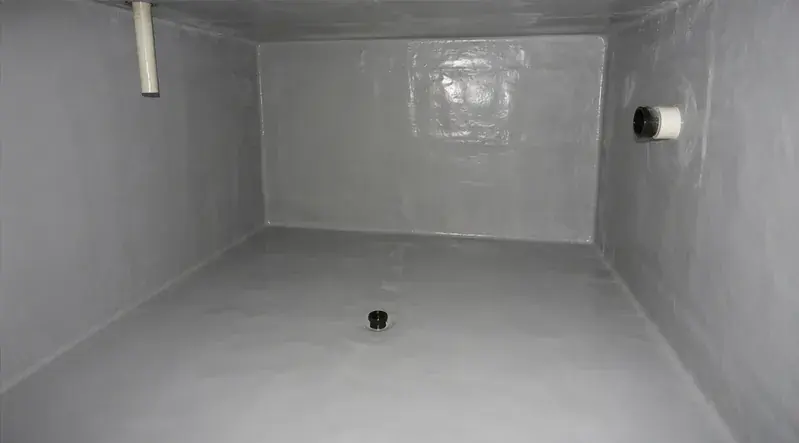
Eventually, the owner may be spending more time chasing individual leaks than solving the underlying water-retention problem. If several previous repairs have failed or leaks keep appearing in new places, it may be worth looking at the cistern as a complete system rather than another individual crack. A custom liner takes that broader approach. Instead of asking each aging portion of the original surface to remain watertight, it creates one new continuous membrane throughout the interior.
Sign #5: You See Moisture or Seepage Around the Cistern
Not all cistern leaks are easy to observe from inside the tank. Depending on how and where the cistern is constructed, moisture may appear around the exterior or in nearby areas: unexplained dampness, wet areas adjacent to the cistern, persistent moisture around accessible walls, water appearing where it normally shouldn't, or seepage that corresponds with a falling cistern level.
These symptoms need to be interpreted carefully. Groundwater and external moisture can sometimes make an area wet even when stored water isn't leaking outward, so moisture by itself is not proof. But when exterior dampness shows up alongside unexplained water loss, cracking or deteriorated interior surfaces, it becomes another reason to investigate.
Sign #6: Leaks Are Appearing Around Pipes, Joints or Penetrations
A cistern is rarely just a simple concrete box. Water lines, inlet pipes, overflow pipes and other components pass through the walls, and construction joints, corners and transitions create additional areas where waterproofing needs to perform properly. Over time, these locations can become potential leak points: pipe penetrations, wall-to-floor transitions, corners, construction joints, old fittings, overflow penetrations, and previously sealed openings all deserve a look.
A custom liner installation needs to account for these details. It isn't enough for the membrane itself to be waterproof if openings and penetrations aren't properly incorporated into the system. That's exactly why accurate measurements, photographs and information about existing fittings matter when designing a liner.
Sign #7: You're Refilling Your Cistern More Often Than You Used To
Sometimes cistern problems become normalized. No water pouring from a crack, no dramatic structural failure. You just notice the water truck is coming more often, or the cistern doesn't last as long between fills. If household or property usage hasn't meaningfully increased, don't assume this is simply part of owning an older cistern.
Compare what's happening now with what was normal previously. Has water consumption changed? Are there known plumbing leaks? Is the cistern being filled to the same level? Has the refill interval become noticeably shorter? Can the water loss be explained? If it can't, investigating may save you from paying indefinitely for water that never reaches the tap.
Does a Leaking Cistern Always Need a Liner?
No, and this is important. A liner is one method of repairing the water-retaining function of a cistern. It is not automatically the best answer to every leak. The right repair depends on where the leak is occurring, whether the problem is isolated or widespread, the condition of the interior, previous repair history, structural stability, cistern dimensions and construction, accessibility, and the intended use of the water.
If one isolated crack is responsible and the rest of the cistern is in excellent condition, a localized repair may be sufficient. If the cistern has widespread cracking, repeated failed repairs or a generally deteriorated interior, a liner may offer a more comprehensive approach. See our overview of cistern repair options.
When Does a Cistern Liner Make Sense?
A liner becomes particularly worth a look when several of the warning signs above occur together.
You have several leaking areas
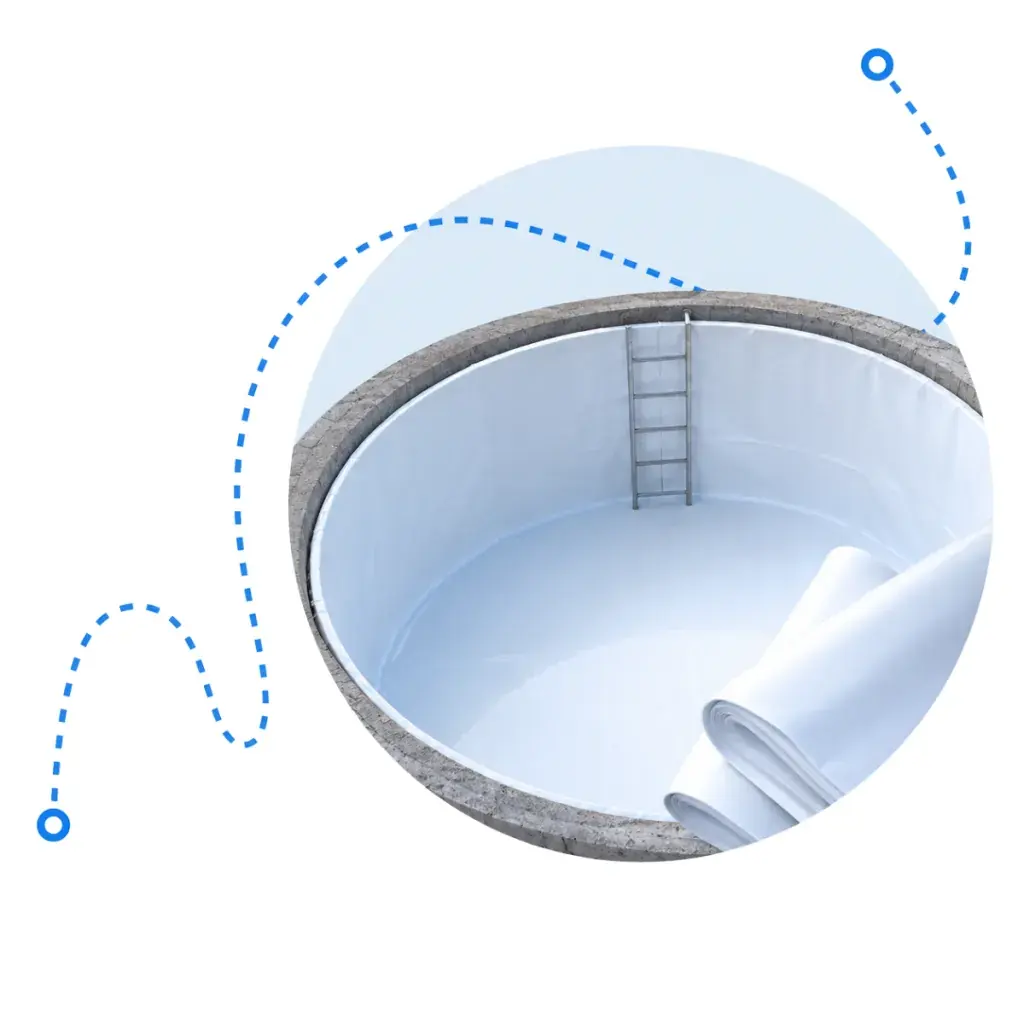
Instead of repairing multiple defects individually, the liner creates one continuous water-retaining barrier.
Previous patches have not solved the problem
Repeated failures can indicate that treating individual areas isn't addressing the condition of the cistern as a whole.
The cistern structure remains usable
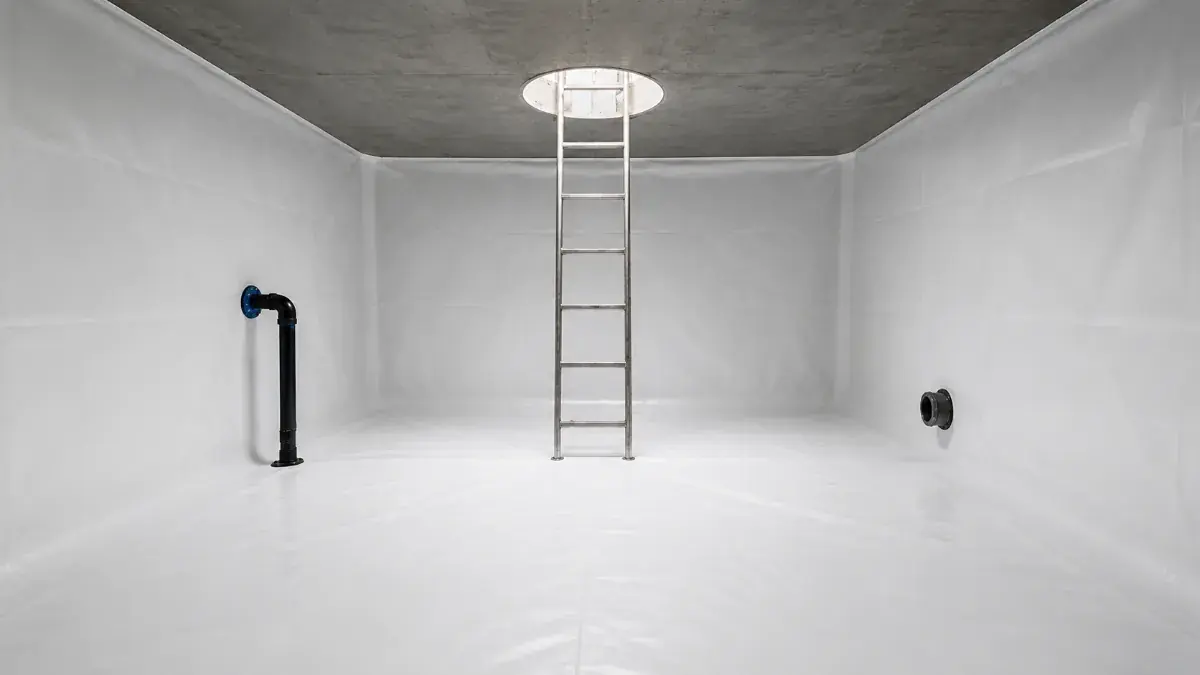
This is one of the most important considerations. If the cistern still provides a suitable structure, a liner may allow you to preserve it while creating a new waterproof interior.
Replacement would be highly disruptive
Removing and replacing an underground concrete cistern can involve excavation, demolition, plumbing changes, equipment access and restoration of the surrounding property. Lining it may be worth evaluating before taking on a full replacement project.
You need a custom solution
Older cisterns weren't necessarily built to today's standardized tank dimensions. A custom-fabricated liner can accommodate the actual cistern rather than requiring it to match a standard off-the-shelf size.
A liner is designed to hold water. It is not intended to keep an unstable structure from collapsing. That distinction cannot be overstated. Conditions that need further assessment first: significant wall displacement; severe structural cracking; collapsing masonry; major settlement; serious deterioration of structural components; unsafe ceilings or access areas; conditions that could puncture or damage the liner; significant external water-pressure concerns.
If the structure itself is failing, that problem needs to be addressed before simply placing a membrane inside it. A good liner project starts by determining whether the cistern is actually an appropriate candidate for lining.
Cistern Liner vs. Patching a Leak
Patching and lining solve the problem in different ways. A patch repair targets a particular defect. A cistern liner creates a new water-retaining membrane throughout the lined area. Neither approach is automatically superior. An isolated crack in an otherwise sound cistern might be a perfectly reasonable repair candidate. But if you're looking at ten old patches, three new cracks and an interior coating that's beginning to fail, another patch just continues the cycle. The broader the deterioration, the more useful it is to compare the cost and expected result of ongoing repairs against a complete liner system. We explore this in more detail on our concrete cistern waterproofing page.
What Should You Do If You Think Your Cistern Is Leaking?
Start with information. You don't need to know the exact repair method before contacting a cistern-liner company. Gathering a few basic details makes the initial assessment much easier.
1. Track the water loss
Note how quickly the water level is falling and whether normal usage could explain it.
2. Rule out obvious plumbing leaks
Check toilets, fixtures, pumps and accessible plumbing where practical.
3. Photograph visible damage
Photograph cracks, old repairs, deteriorated areas, pipe penetrations, corners, and the overall cistern interior.
4. Gather approximate dimensions
Length, width and depth are an excellent starting point. Note any unusual shape, columns or compartments too. Use our measuring guide.
5. Don't enter a cistern unless you're qualified to do so safely
A cistern is an enclosed space and can present serious hazards, including confined-space atmosphere risks. If obtaining measurements or photos would require entering the tank, use appropriate professional confined-space procedures rather than treating it like an ordinary room. This one isn't a suggestion. It's a real hazard.
6. Have the cistern assessed
With dimensions, photographs and a description of the problem, an experienced liner company can begin determining whether a custom liner is a reasonable option.
Stop Chasing the Leak and Look at the Whole Cistern
The biggest mistake with an aging cistern is focusing only on the newest visible crack. That crack may be the problem, or it may simply be the latest symptom of a water-retaining surface that has reached the point where isolated repairs are becoming less effective. If your cistern is losing unexplained amounts of water, developing multiple cracks, showing widespread interior deterioration, requiring repeated repairs, leaking around joints or penetrations, or becoming increasingly expensive to keep filled, it may be time to consider whether a custom cistern liner offers a more comprehensive solution.
Think your cistern is leaking?
Send us photos, approximate dimensions and a description of what you're seeing. We'll help determine whether it looks like a good candidate for a custom liner.
Frequently Asked Questions About Leaking Cisterns
How can I tell if my cistern is leaking?
Unexplained water loss is one of the strongest warning signs. Visible cracks, moisture, deteriorated interior surfaces and repeated failed repairs can provide additional clues. Plumbing leaks and increased water usage should also be ruled out.
What causes a cistern to lose water?
Possible causes include cracks, deteriorated concrete, failed repairs, leaking joints, pipe penetrations or plumbing problems connected to the cistern. The source should be identified before selecting a repair method.
Can a leaking concrete cistern be repaired?
Often, yes. Depending on the cistern's condition and the source of the leak, options may include localized repairs, waterproof coatings or a custom cistern liner.
Will a cistern liner stop water loss?
A properly designed and installed liner creates a new water-retaining barrier inside the cistern. Whether lining is appropriate depends on the condition and structural stability of the existing cistern.
Is it better to patch a leak or install a liner?
A localized patch may make sense for an isolated defect in an otherwise sound tank. A liner becomes more attractive when there are multiple leaks, widespread deterioration or a history of repeated failed repairs.
Can a cracked cistern be lined?
Cracking alone does not automatically prevent lining. However, serious structural cracking or movement must be evaluated before installing a liner.
Can an old cistern be relined?
Potentially, yes. Age by itself is not the deciding factor. The important questions are whether the cistern remains structurally suitable and whether its interior can be appropriately prepared for the liner system.
Is it safe to enter a cistern?
Cistern entry can present confined-space hazards, including potentially hazardous atmospheres or low oxygen. Do not enter a cistern unless the work is being carried out with appropriate training and safety procedures.
Further reading: NSF/ANSI/CAN 61 drinking water components standard (SCC), CSA B126 water cistern standard (SCC), and Alberta Agriculture guide to cistern water storage.
↑ Back to top