What Is a Cistern Liner? The Complete Guide to Repairing and Protecting Your Cistern
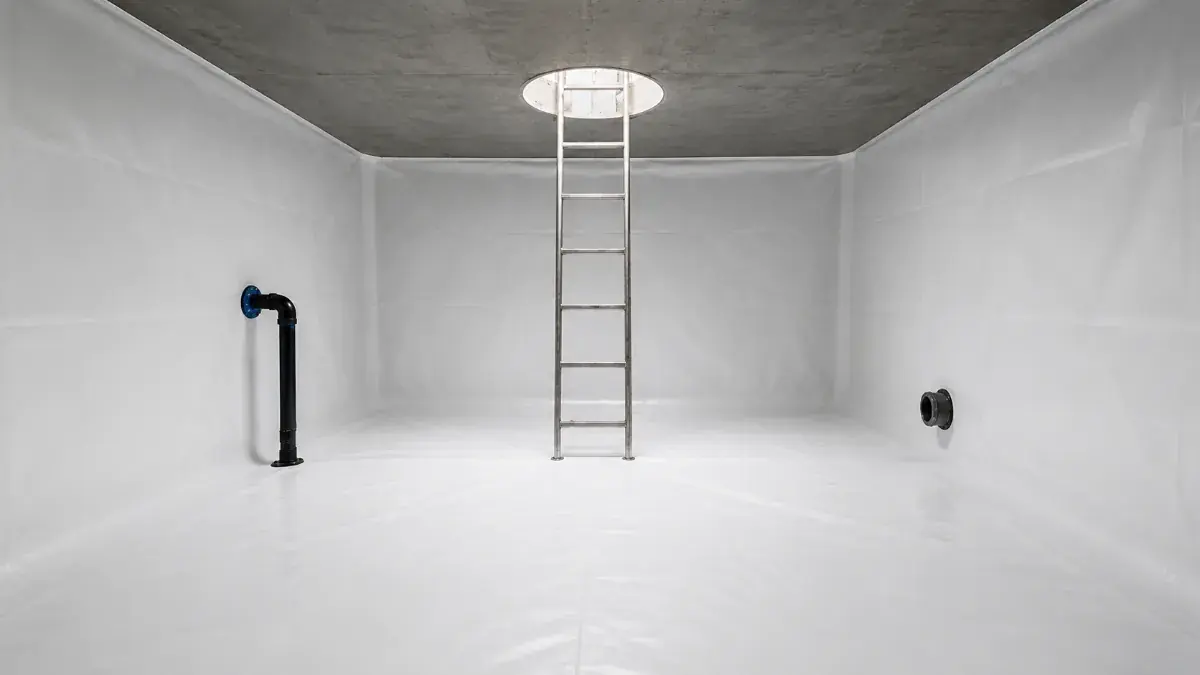
Quick answer: A cistern liner is a custom-fitted waterproof membrane installed inside an existing cistern, creating a new watertight interior so the original structure can stay in place. It's an alternative to patching, coatings, or full replacement, though it isn't the right fix for every cistern.
A leaking or deteriorating cistern doesn't always mean you need to replace the entire tank.
In many cases, a cistern liner can create a new watertight barrier inside the existing tank, allowing the original cistern structure to remain in place while separating the stored water from cracked, porous, or deteriorating surfaces. For property owners dealing with an older concrete or masonry cistern, a liner can provide an alternative to repeatedly patching leaks, applying new coatings, or undertaking a much larger cistern replacement project. But a liner isn't the solution to every cistern problem. Here's what it does, how it works, when it makes sense, and what to consider before lining an existing cistern.
What Is a Cistern Liner?
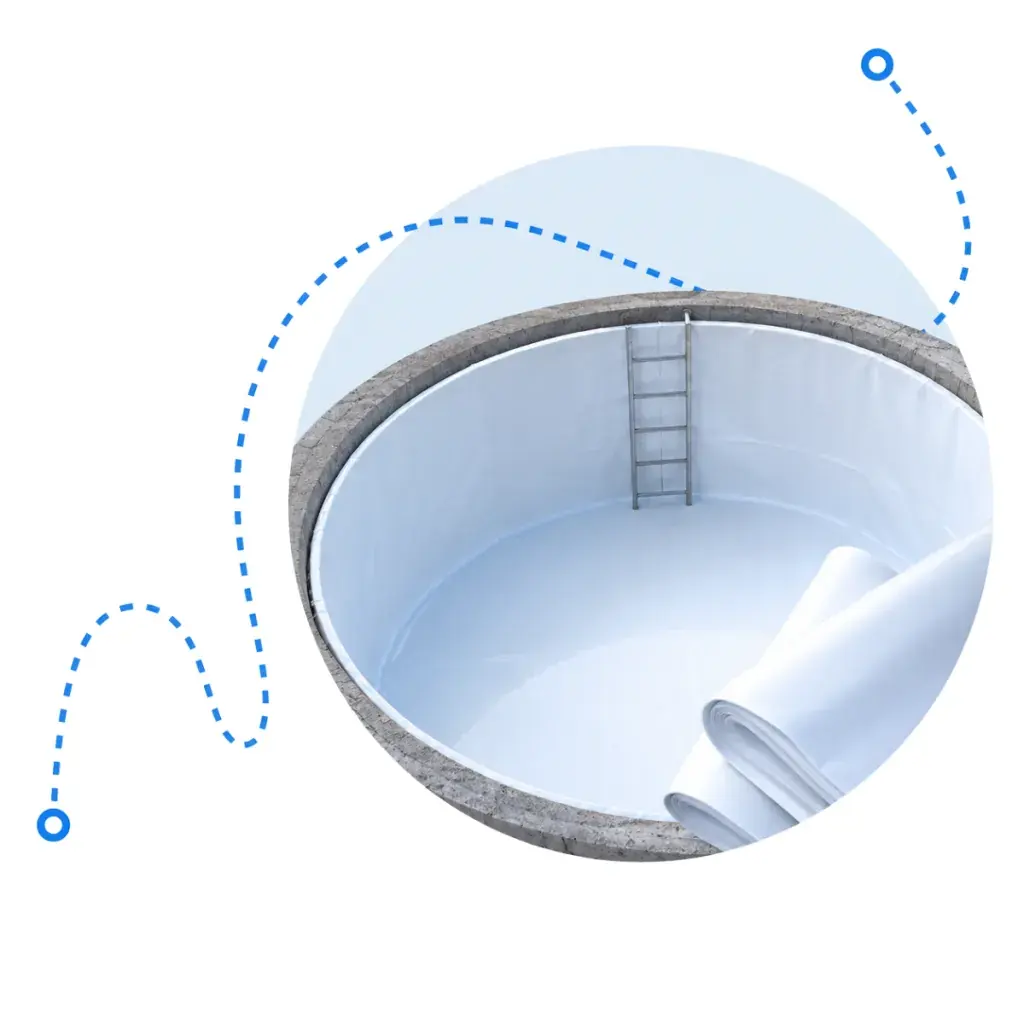
A cistern liner is a fabricated waterproof membrane designed to fit inside an existing water-storage cistern. Rather than relying entirely on the original concrete, block, masonry or other tank surface to hold water, the liner becomes the primary water-retaining barrier. Think of it as creating a new watertight interior within the existing cistern. The cistern provides the surrounding structure, while the liner contains the water.
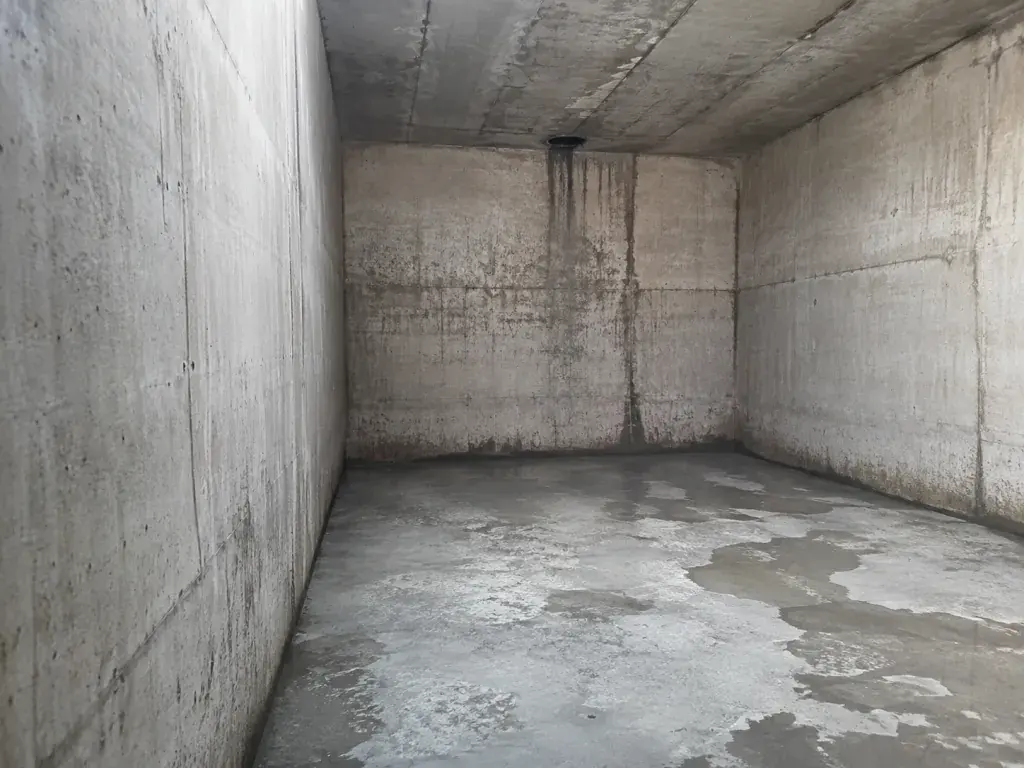
This distinction matters most with older concrete cisterns. Concrete is strong, but over many years it can crack, deteriorate, become porous, or develop leaks around joints and penetrations. A properly selected and installed liner can isolate the stored water from those problem surfaces.
Why Do Cisterns Begin to Leak?
Cisterns operate in demanding conditions. They're expected to hold a substantial volume of water continuously while the surrounding structure is exposed to soil movement, temperature changes, groundwater, aging, and normal material deterioration. Several problems can eventually lead to water loss.
Cracks in the concrete
Concrete cisterns can develop cracks through settlement, movement, freeze-thaw cycles, aging or structural stresses. Some cracks remain relatively minor. Others continue moving and become increasingly difficult to control with rigid repair materials alone.
Aging or porous concrete
A cistern does not necessarily need a large visible crack to lose water. Older concrete can become porous or deteriorate enough that moisture slowly migrates through the surface. Concrete was never fully watertight to begin with, it just took a few decades for that to become an issue. The owner may simply notice that the water level keeps falling faster than expected.
Failed previous repairs
Many older cisterns have already been repaired at least once. You may find layers of waterproof coatings, hydraulic cement, mortar, sealants or other patching products applied over the years. These repairs can work in the right situation, but they can also deteriorate, separate from the underlying surface or crack again if movement continues.
Leaks around penetrations and openings
Pipes, drains, overflows and other penetrations create additional areas that require careful waterproofing. A failure around one of these locations can cause water loss even when most of the cistern itself remains in reasonable condition.
Movement of the structure
A liner can accommodate certain conditions differently than a rigid cementitious coating, but it should never be viewed as a way to ignore a serious structural problem. If a cistern is shifting, collapsing or significantly deteriorated, the structure itself should be evaluated before a liner is considered.
How Does a Cistern Liner Work?
The concept is relatively simple: the existing cistern provides the structure, the liner provides the watertight interior. A custom liner is measured and fabricated for the dimensions and configuration of the cistern, then installed inside the prepared tank and secured using an appropriate attachment system. Openings and penetrations must also be incorporated properly into the installation.
Once installed, the stored water is contained by the liner rather than depending entirely on the old surface of the cistern to remain watertight. This is one reason liners can be attractive for older cisterns with multiple problem areas. Instead of chasing individual leaks one at a time, the goal is to establish a continuous water-retaining barrier throughout the cistern.
What Types of Cisterns Can Be Lined?
Cistern liners can potentially be used in a variety of cistern configurations, including many:
- Concrete cisterns
- Concrete block or masonry cisterns
- Underground cisterns
- Above-ground water-storage tanks
- Older cisterns with deteriorated interior surfaces
- Rectangular cisterns
- Square cisterns
- Cisterns requiring custom dimensions
- Tanks used for potable or non-potable water, provided the liner material is appropriate for the intended application
Every installation is different. Dimensions, wall condition, corners, columns, pipe penetrations, access openings and the intended use of the stored water can all affect how a liner needs to be designed. That's why accurate measurements and a proper assessment of the existing cistern matter. See our measuring guide for how to get started.
When Is a Cistern Liner a Good Repair Option?
A liner may be worth considering when the cistern itself remains structurally usable but the existing interior is no longer reliably holding water. Common situations include:
A cistern that repeatedly loses water
If the cistern needs frequent topping up and no plumbing leak explains the water loss, the tank itself may be leaking.
Multiple cracks or seepage areas
Repairing one obvious crack doesn't always solve the problem if the cistern has several deteriorated areas. A liner can address the interior as a complete water-retaining surface rather than treating only one visible leak.
Previous patches keep failing
Repeated patching can become frustrating and expensive. When one repair fails after another, creating a separate waterproof barrier may make more sense than continuing to repair the same aging surface.
The cistern is difficult or expensive to replace
Replacing an underground concrete cistern can involve demolition, excavation, equipment access, plumbing work and reconstruction. Where the existing structure remains suitable, lining it may offer a less disruptive solution. We compare the two in cistern liner vs. cistern replacement.
You want to isolate the water from an aging interior surface
Even where leakage is not severe, deterioration of the existing interior may make a new liner worth considering.
When a liner is NOT the right solution. A cistern liner is designed to contain water. It is not designed to replace the structural function of a failing cistern. Lining an unstable tank doesn't fix what's actually wrong with it, it just hides it under a very expensive membrane. Warning signs that call for structural evaluation first: major wall movement; collapsing or severely deteriorated masonry; large displaced cracks; serious settlement; unstable walls or ceilings; conditions that could damage or trap the liner; significant groundwater or external-pressure issues.
The best cistern-lining projects begin with a sound understanding of what is causing the leak and whether the existing tank remains suitable for lining.
Cistern Liner vs. Patching or Waterproof Coating
There is no single repair method that is right for every cistern. Small, isolated defects may sometimes be repaired successfully with appropriate patching or waterproofing products. A cistern coating may also be suitable where the surface can be properly prepared and the coating system is compatible with the tank and intended water use.
A liner takes a different approach. Rather than attempting to make the original cistern surface watertight again, the liner establishes a separate waterproof membrane inside it. That can become particularly attractive when the existing surface has numerous cracks, older repairs or widespread deterioration. The choice depends on factors such as:
- The condition of the cistern
- The source of the leak
- Whether cracks are isolated or widespread
- Previous repair history
- Accessibility
- Intended water use
- Budget
- Expected service life
- Structural stability
We cover the differences in more detail on our concrete cistern waterproofing page.
Are Cistern Liners Safe for Drinking Water?
This question deserves more than a simple yes or no. If a cistern stores water intended for drinking, the material that comes into contact with that water needs to be suitable for potable-water applications. One important standard used for drinking-water system materials is NSF/ANSI/CAN 61, which evaluates the health effects of materials, products and components that contact drinking water.
When selecting a liner for potable-water storage, verify the actual certification and approved application of the material being used rather than relying only on broad descriptions such as "food grade." That phrase on its own isn't a certification. It's marketing copy standing next to one.
There is another important distinction: a potable-water-suitable cistern liner provides an appropriate water-contact surface, but the liner itself does not treat the incoming water. The safety of stored drinking water can also depend on the water source, collection system, filtration, disinfection, cistern maintenance and local requirements. In other words, a potable-water liner can be part of a safe drinking-water system, but a liner alone does not make untreated water potable.
How Is a Cistern Liner Installed?
Exact installation methods vary depending on the cistern and liner system, but the process generally follows several stages. Our installation guide walks through it step by step.
1. Evaluate the cistern
The existing tank is assessed to determine whether it is suitable for lining and whether structural repairs are required first.
2. Measure the cistern
Accurate dimensions are critical. Length, width, depth, wall configuration, corners, openings, penetrations and other features may all need to be recorded. For custom cisterns, photos can also help identify unusual conditions that should be accounted for during fabrication.
3. Prepare the interior
The cistern is drained and the interior is prepared for installation. Sharp projections, loose material or conditions that could damage the liner need to be addressed. The goal is not necessarily to make an old concrete cistern look new. The goal is to create an appropriate environment for the liner to be installed safely and correctly.
4. Fabricate the liner
Using the required measurements, the liner is fabricated to fit the cistern. This is where a custom liner differs from simply purchasing a generic sheet of membrane and trying to make it fit on site.
5. Position and secure the liner
The liner is positioned within the cistern and attached according to the installation system. Care is taken around corners, walls, penetrations and openings.
6. Complete and inspect the installation
Before the cistern returns to normal service, the installation should be inspected to ensure the liner is positioned and secured correctly. The exact commissioning process depends on the liner, the application and how the stored water will be used.
What Are the Benefits of a Cistern Liner?
Creates a continuous waterproof barrier
Rather than addressing only individual visible cracks, the liner creates a new water-retaining surface across the cistern interior.
Can extend the useful life of an existing cistern
A structurally usable cistern does not always need to be demolished simply because the original interior has begun leaking.
Reduces dependence on deteriorated surfaces
The stored water is contained by the liner rather than relying solely on aging concrete, masonry or previous coatings.
Can accommodate custom cistern dimensions
Cisterns are not always standardized. Older tanks in particular can have unusual dimensions, openings and configurations. Custom fabrication allows the liner to be designed around the actual cistern.
May avoid a much larger replacement project
Depending on the property, replacing a cistern can require excavation, demolition and reconstruction. A liner may provide a way to preserve the existing structure while addressing the water-retaining surface.
How Long Does a Cistern Liner Last?
There isn't one responsible lifespan number that applies to every cistern liner. Service life depends on factors including:
- Liner material
- Thickness and construction
- Quality of fabrication
- Installation quality
- Condition of the supporting structure
- Water chemistry
- Temperature
- UV exposure where applicable
- Maintenance
- Mechanical damage
- How the cistern is used
When comparing liners, look beyond the headline lifespan claim. Ask what material is being supplied, what application it is intended for, whether it is appropriate for potable water where required, how it is installed and what warranty applies. Those details tell you much more than a generic claim that every cistern liner will last the same number of years. A nice round number on a sales page is not a spec sheet.
How Much Does a Cistern Liner Cost?
Cistern liner pricing is generally project-specific because cisterns vary significantly. Important cost factors can include:
- Cistern length and width
- Depth
- Total liner area
- Shape of the cistern
- Number of corners or compartments
- Pipe penetrations
- Access conditions
- Liner material
- Potable-water requirements
- Preparation or repair work required
- Installation requirements
- Location and shipping
This is why dimensions and photos are often more useful than simply asking for the cost of "a cistern liner." Two cisterns with the same water capacity can require very different liners.
Is a Cistern Liner Right for Your Cistern?
If your cistern is leaking, losing water or requiring repeated repairs, a liner may be worth a look before deciding to replace the entire tank. The key question is not simply "Can we cover the crack?" It is: "Is the existing cistern structurally suitable, and would creating a new watertight interior provide a more practical long-term repair?"
That decision should take into account the condition of the cistern, how the water is used, the repair history and the type of liner being considered. At Cistern Liner Co., our focus is helping property owners determine whether their cistern is a good candidate for a custom liner and providing a liner designed around the dimensions and requirements of the tank.
Request a Cistern Liner Quote
Send us your cistern dimensions, photos and a brief description of the problem. We'll help determine the next steps for a custom cistern liner.
Frequently Asked Questions About Cistern Liners
Can you put a liner in a concrete cistern?
Yes, many concrete cisterns can be lined provided the existing structure is suitable for the installation. Structural problems should be addressed before installing a liner.
Will a cistern liner stop a leak?
The purpose of a properly installed cistern liner is to create a new watertight barrier inside the tank. Whether a liner is appropriate depends on the cause of the leak and the structural condition of the cistern.
Can a cracked cistern be lined?
Often, yes. Cracking does not automatically mean a cistern cannot be lined. However, major structural movement or instability should be evaluated and repaired before lining.
Are cistern liners safe for drinking water?
Cistern liners used in potable-water applications should be made from materials specifically suitable and appropriately certified for contact with drinking water. Always verify the certification of the actual material being supplied.
Does a potable-water liner make rainwater safe to drink?
No. A potable-water-compatible liner provides a suitable surface for storing the water. Water treatment, filtration, disinfection, testing and source-water quality are separate issues.
Do cracks have to be repaired before installing a liner?
That depends on the crack and the liner system. Loose, sharp, unstable or structural defects may require repair or preparation before installation even though the liner will become the primary water-retaining barrier.
Can an old cistern be relined?
Yes, older cisterns are often among the situations where a liner is considered. Suitability depends more on the condition and stability of the cistern than its age alone.
Are custom cistern liners available?
Yes. Custom fabrication is particularly useful for existing cisterns because older tanks frequently have dimensions and configurations that do not match standard prefabricated water tanks.
Further reading: NSF/ANSI/CAN 61 drinking water components standard (SCC), CSA B126 water cistern standard (SCC), and Alberta Agriculture guide to cistern water storage.
↑ Back to top